
The Unlikely Source of Inspiration for Knight Frank’s Wine Customer Engagement Tool
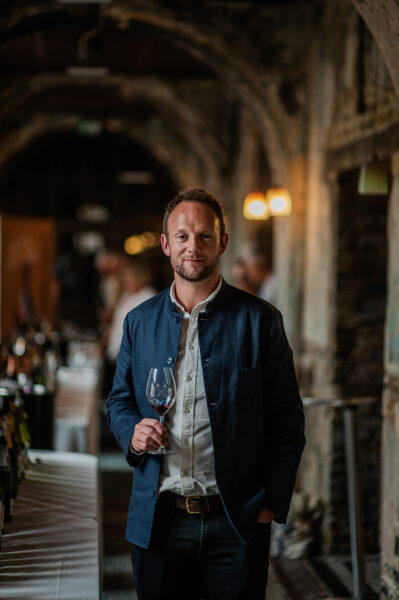
Ed ManseL Lewis

Wendell Berry, the American activist, poet and farmer once said that “the significance – and ultimately the quality – of the work we do is determined by our understanding of the story in which we are taking part”. Every now and again, these words chime with me when a project I am working on takes me back to a time in my teens or twenties when someone or something in my life nudged the tiller.
I had one of these moments recently when Gary Smith, the CEO of MDCV, an award-winning English sparkling wine producer, rang me and told me how our Wine Customer Engagement tool had almost doubled the quantity of footfall in their cellar door. Our tool helps wine producers rapidly qualify who their local customers are and where they are, so they can target them more efficiently online.
This Wendell Berry moment took me back to 2008, the year that I left Newcastle University. One of the last newspaper headlines that I remember reading in my kitchen was ‘Lehman Brothers Files For Bankruptcy’. It was perhaps the worst time to leave university in living memory. Job offers that I had been promised were withdrawn and my 2.1 in Marine Biology was worth nothing more than the certificate it was printed on.
So, I did what any student does when things get difficult. I moved home to live with my mum and dad.
Withing nine months, I had tried and given up on a whole number of loose ends. I had done an unpaid internship making t-shirts for DJs, laboured on a building site, worked in a bar, washed cars and done my chainsaw cross cutting course. During a rock bottom phone call with my cousin, I remember him trying to encourage me by saying “well at least you’re getting a lot of life experience”. It’s fair to say that by that stage, I was fed up life experience.
So, I arranged to meet some friends in a pub for a ‘state of the nation’ catch up. They were all in a similar boat to me. One was working at his old school as the manager of the gym, another was doing odd gardening jobs and the third was trying to catch a break as a crew member on a boat. At some point a few pints in, George, who was aspiring for a life at sea, mentioned something he had read about the Prince’s Trust Enterprise Programme. They provided support to people between the age of 18-30 who have a business idea and need a mentor and access to low-interest loans.
It triggered something in the right side of my brain, where creativity and imagination live, and I leant in. For a while George and I had toyed with the idea of creating wooden, disposable camping stoves, made by cutting a hollow into the side of a log to make an oven, and a cross down from the top, to make a flue, which we would sell at festivals and garden centres.
Young enterprise
So it was that we found ourselves at Swansea University a month later, on a three-day Prince’s Trust Enterprise Programme in a group of twelve, talking about our business plan. The mentors were all volunteers who had enjoyed successful careers and wanted to pass on their learnings. They listened to our business plans and advised us on how to segment markets, how to calculate our break even point and think about the strengths and weaknesses of our plan.
It sparked something in me that I had not felt at school or university. The feeling of walking a trail that had not been broken before. The excitement of uncertainty and the only compass bearing to navigate through it a gut feel. So, I pulled on the thread, and it took me to a field in Shropshire.
I had secured a trader’s pitch at the ‘Hole in the Wall’ festival, which was taking place in the walled garden of a country estate near Bridgnorth. I had borrowed my grandmother’s gazebo and arranged my wooden, disposable camping stoves, which I had branded Eco Stoves, in a pyramid in the gazebo.
I watched as festival goers came and went and came and went. It soon became obvious that no-one was taking the blind bit of notice of my trade stand. After a while, I realised a different customer engagement tactic was needed, so I loaded four Eco Stoves onto a wheelbarrow and started walking around people’s tents to see if they wanted to buy any.
People camping on their own typically would say no, because lighting the stove would tie them to their tent, and what they wanted was to head off and meet other festival goers. Groups of people on the other hand were much more interested, because the Eco Stoves would be a great focal point for an after party when the music had fallen quiet at the end of the night.
Quickly I began to get a clear idea of who my target customers were, so I would steer my wheelbarrow to tents that slept four or more people, or groups of smaller tents where there was a central patch of grass in the middle of them all. Before long I was getting so good at spotting my customer, that I was selling Eco Stoves on almost every approach, and was having to head back to the gazebo to restock my wheelbarrow every ten minutes or so. By lunchtime, I had sold 18 Eco Stoves, and by the end of the afternoon, I had sold out of all 30 that I had been able to fit into my car boot with the back seats down.
Lessons learnt
Now, spoiler alert, I did not go on to grow the Eco Stove business to be the biggest thing in the camping or outdoor industry, I did not secure VC investment and go on to IPO the business before becoming a philanthropist. No. I did a few more festivals, which paid me enough to cover my petrol there and back, before I met a girl, who I later married, who suggested it might be a good idea to go and do a masters in Rural Estate Management. Plus, my grandmother wanted her gazebo back.
The point is, the lessons I learnt pushing a wheelbarrow around that field in Shropshire about how to rapidly qualify who your customers are, and where they are, have stayed with me throughout my career. That was learning I harked back to in my Wendell Berry moment, after the call with Gary. I realised what we are now doing by helping wine producers fill their wineries with customers is based on the same playbook I learnt in that field in Shropshire. We make it easy for wine producers to find out who their customers are, and where they are.
There were no wheelbarrows involved in our methodology this time, regrettably, Instead we had leveraged Experian credit data on people’s household income and spending habits to profile who target wine consumers are. Specifically, we looked for people with a household income of £75,000 or more, who enjoy eating out, supporting local businesses, spending money on experiences and buying from luxury brands.
Knight Frank’s data team then helped us work out where wine customers are by identifying where a minimum of 500 of them live within clusters and we used Royal Mail data to export the post code districts of those areas into Excel. We also did some quite cool stuff to identify the location of hotels and restaurants with 4* & 5* Trip Advisor ratings near to those postcode areas, so if target consumers eat out locally, they might discover our clients’ wines on the wine list.
Once we had done that, we (well, Bertie mainly, but I supervised) packaged our Wine Customer Engagement Tool up and began selling it to wine businesses.
So, what has been the upshot? Where are the cast studies?
Well, in spring 2025, we sold our first tool to Gary Smith from MDCV. Their marketing team narrowed their social media ads only to people who lived in those key post code districts near their winery.
Nine months on from them implementing the insights in the tool, I got the phone call from Gary. My Wendell Berry moment.
Their footfall in the cellar door had increased 90% year-on-year since before they started using the insights in our tool and the sales of their super premium sparkling wine Kyng, which sells for £245, has increased by 540%.
It’s a point of real pride for us in Knight Frank, that we can support a wine business as exciting as MDCV with growth results like that, and we really, really want to be part of the story of other wine businesses. The uptake from the industry has been amazing because they understand the value that it would bring to their business. One wine producer has even asked for exclusivity of the tool throughout the county in which they are based.
It seems like a very long time ago that I was in that kitchen in Newcastle wondering how my future was going to play out. In some ways, the wine industry is going through its own market correction right now. During times like this, you need to keep investment focused on what works, and this shit works.
For more info email Ed at edwardmansel.lewis@knightfrank.com.