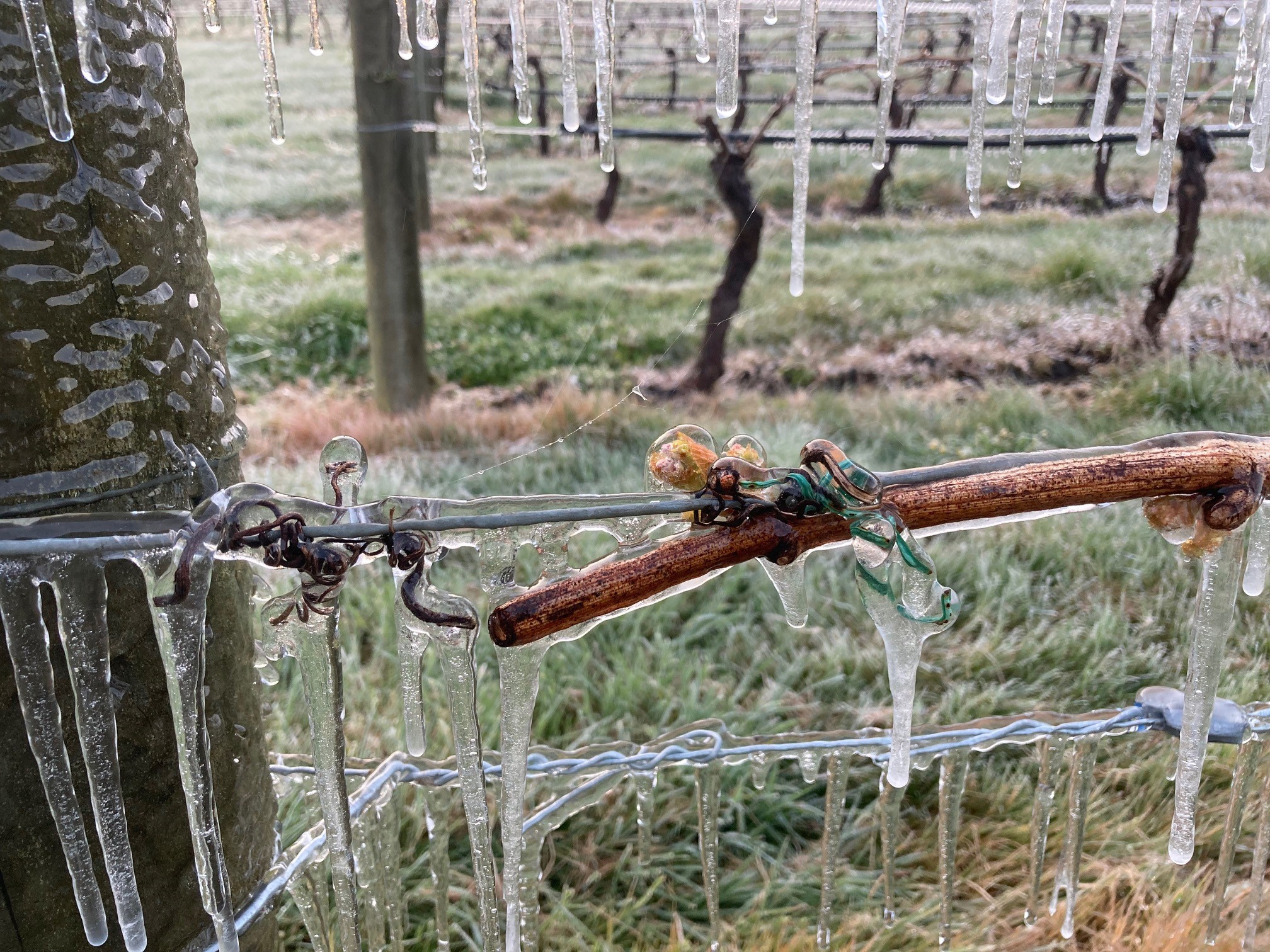
Management systems provide frost-related vineyard crop protection
An innovative management and frost forecasting project looks at the way our frost systems are currently being used and how farm owners can predict weather risk to prevent yield loss each year.
Low and freezing temperatures can be a huge issue for many UK vineyards, particularly during the season when the buds and new shoots are emerging.
Thanks to funding from Innovate UK, the nation’s innovation agency, the project ‘Vineyard Frost’ is helping to put systems in place to lower the threat of yield loss so that vineyard workers are able to focus on specific risk areas.
The Vineyard Frost Project, titled ‘Smarter Forecasting, Communications and Management of Frost Risk in Vineyards’, is an innovative management and frost forecasting project, which has been funded by Innovate UK and the Department for Environment, Food & Rural Affairs (Defra).
It aims to revolutionise frost-related crop protection, as many current frost protection methods are costly to run due to their labour-intensive requirements.
However, as well as aiding the development of domestic viticulture and the UK’s growing agricultural sector, this project has the potential to reduce costs and labour efforts whilst offering a solution to prevent one of viticulture’s biggest problems.
It is expected that UK vineyards will remain vulnerable to frost events as climate change is causing warmer springs and therefore earlier budburst.
It is helpful to know when a frost is likely to hit so that vineyard managers have plenty of warning as to when they need to take preventative measure to protect their crop.
Being able to defend their crop helps the farm manager to protect the upcoming harvest as well as the year after.
The project will create hyper-localised, site-specific and variety-specific frost risk forecasts, which allows vineyard managers to make more targeted, informed and sustainable choices when they respond to frost events.
Topographic information and AI modelling are used to provide information specific to the bud height, as opposed to the standard weather measurement height, whilst monitoring the variability of temperature in the vineyard.
Additionally, advice can be given to the farm manager based on the type of frost that is identified, irradiation frost or advection frost.
Results can then be produced in a web app on the VineBuddy portal after data has been collected from the vineyard.
The information can then be viewed at any time on any device by the vineyard manager, which shows them measurement and forecast details.
In addition, the frost alerts can also be sent as a direct notification to the vineyard manager’s phone to warn them of incoming frost and the estimated time it is likely to arrive.
Thanks to these forecasts, the threat of yield loss will be reduced, and vineyard workers can focus on at-risk areas and the intervention techniques based on the conditions.
The project, delivered by a consortium composed of WeatherQuest, Plumpton College, Vinescapes, Vinewatch, Wines of Great Britain (WineGB) and the UK Agri-Tech Centre, will help to support UK vineyard profitability, efficiency and sustainability, while providing an open standard that can be adopted around the world.
It builds on valuable data from the Bud Burst Hub that was completed by vineyards across the UK in 2025, which explores the systems currently used by vineyard managers and owners to monitor the data they collect as well as monitor frost risk.
Find out more about the project here.